
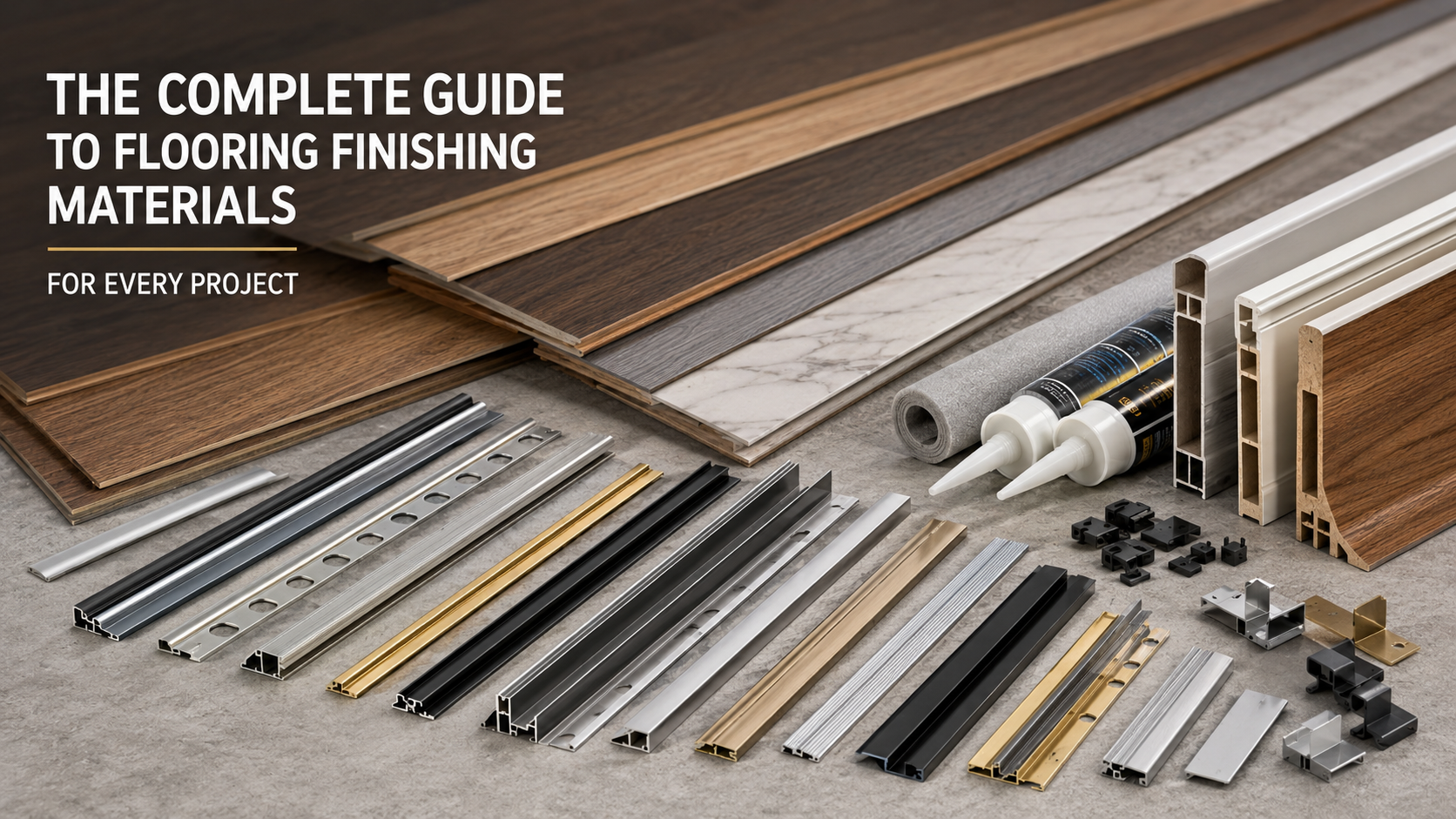
When it comes to creating beautiful, durable, and professional-looking floors, choosing the flooring itself is only part of the equation. The finishing materials used during installation are equally important, ensuring the floor performs well, lasts longer, and delivers a polished appearance. Whether you're renovating a home, designing a commercial space, or managing a large construction project, understanding flooring finishing materials can help you achieve exceptional results.
What Are Flooring Finishing Materials?
Flooring finishing materials are the components that complete and protect a flooring installation. These include transition strips, edge trims, stair nosing, skirting boards, expansion joint profiles, reducers, and floor protection accessories. While they may seem like small details, these products play a significant role in both functionality and aesthetics.
For example, transition strips provide a smooth connection between different flooring surfaces, while stair nosing improves safety by protecting the edges of stair treads. Skirting boards cover expansion gaps and create a clean finish between walls and floors.
Why They Matter
Quality finishing materials do more than improve appearance. They help protect flooring from daily wear, prevent edge damage, accommodate natural floor movement, and reduce maintenance costs over time.
Without suitable finishing materials, even premium flooring can deteriorate quickly. Loose edges, visible gaps, cracked corners, and uneven transitions can all result from poor finishing choices.
Types of Flooring Finishing Materials
Some of the most commonly used finishing materials include:
- Transition profiles for connecting different floor heights.
- Edge trims to protect exposed flooring edges.
- Stair nosing for enhanced safety.
- Expansion joint profiles that allow floors to expand and contract.
- Skirting boards for a neat wall-to-floor finish.
- Floor reducers for smooth height transitions.
Each product serves a specific purpose and should be selected according to the flooring type and installation environment.
Choosing the Right Material
Different environments require different materials. Aluminum profiles are popular for commercial applications because of their durability. Stainless steel provides excellent strength and corrosion resistance, while PVC profiles offer a cost-effective solution for residential projects.
Factors to consider include:
- Flooring type
- Indoor or outdoor application
- Expected foot traffic
- Moisture exposure
- Design preferences
- Budget
Working with an experienced supplier ensures you receive products suitable for your specific project.
Benefits of Buying from a Professional Supplier
A reputable flooring finishing materials supplier offers more than products. They provide technical advice, recommend compatible accessories, maintain consistent product quality, and ensure reliable stock availability.
Professional suppliers also help contractors avoid costly installation mistakes by recommending the correct profiles and accessories for each flooring system.
Conclusion
Flooring finishing materials are essential components that protect your investment while enhancing the final appearance of any flooring project. From transition strips and stair nosing to skirting boards and expansion profiles, every accessory contributes to a safer, stronger, and more attractive floor.
Choosing high-quality finishing materials from a trusted supplier ensures your flooring not only looks exceptional on installation day but continues performing for many years to come.